
Best Acrylic Paint Set for Beginners

Looking for the best acrylic paint set to start your artistic journey? This guide reviews top beginner‑friendly acrylic paint sets that deliver vibrant colors, smooth consistency, and excellent coverage without breaking the bank. Whether you’re a hobbyist, student, or aspiring painter, we’ve hand‑picked sets that provide great pigment quality, easy blending, and durable results. You’ll learn what to look for in terms of color range, tube size, and value for money, plus tips for choosing the right set based on your style and projects. Start painting confidently with the perfect beginner acrylic set.
Our Picks
PICK #1 — Best Overall Beginner Set
Product: Liquitex Basics Acrylic Paint Set (24 colors)
If acrylic paints went to therapy and got their lives together, they’d come back as Liquitex Basics. These paints are smooth, richly pigmented, and—most importantly—well behaved. They blend when you expect them to, layer without throwing a tantrum, and don’t mysteriously turn muddy for no reason.
This is the set that makes beginners think, “Oh… so this is how painting is supposed to feel.”
Best for: Beginners who want quality without paying professional prices
What we like: Consistent texture, reliable color strength, trusted brand
What to know: Student-grade (not professional), but excellent for learning
PICK #2 — Best Value / Budget Option
Product: Winsor & Newton Galeria Acrylic Set
Galeria is the sensible, dependable option. No frills, no nonsense, just solid paint that shows up on time and does the job. The colors mix cleanly, dry to a pleasant satin finish, and won’t make you question your artistic potential halfway through a painting session.
Not flashy. Very functional. Kind of a grown-up about things.
Best for: Beginners on a budget
What we like: Good color payoff for the price, easy to find
What to know: Slightly thinner consistency than premium paints

PICK #3 — Best Simple Starter Set
Product: Daler-Rowney Simply Acrylic Paint Set (12 colors)
This set believes less is more—and it’s right. With a limited palette, you’re forced to actually learn color mixing instead of panic-buying more tubes. It’s simple, unfussy, and ideal if you want to build skills instead of hoarding art supplies “just in case.”
Think: training wheels, but in a good way.
Best for: Absolute beginners, classrooms
What we like: Easy to use, low commitment
What to know: Limited palette compared to larger sets
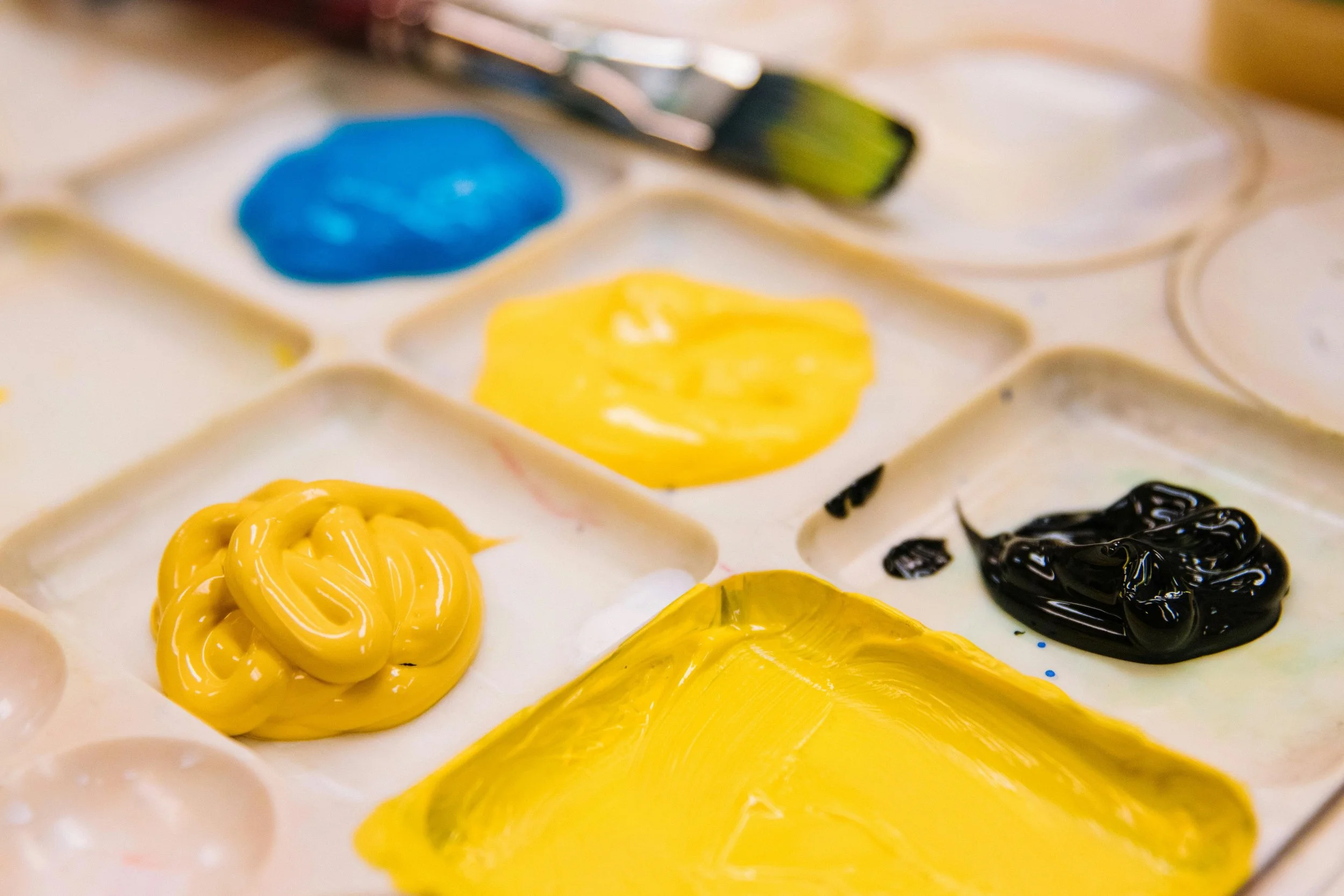
Product: Arteza Gouache & Acrylic Paint Kit (Multi-Medium Art Set)
If you’re looking for a true all-in-one creative kick-starter, this mixed-medium set from Arteza has everything a beginner could ask for. It bundles gouache and acrylic paints with essential tools — including brushes, palettes, and paper pads — so you don’t have to hunt for supplies before you start making art.
Best for: Absolute beginners, hobbyists exploring painting mediums, or gift buyers
What we like: Includes paints, brushes, palettes, and paper pads — everything you need to start creating immediately
What to know: Because it covers multiple mediums (gouache + acrylic), it’s not hyper-specialized in a single category — but that versatility is part of its strength
PICK #4 — Best All-in-One Starter Kit
Your Questions, Answered
-
We evaluated beginner acrylic paint sets based on:
Color range: Enough variety to explore mixing
Pigment quality: Vibrancy and coverage
Consistency: Ease of blending and application
Accessibility: Availability and price
Beginner usability: Predictable results without frustration
These paints were selected for learning and experimentation rather than professional exhibition work.
-
Student-grade paints are ideal for beginners because they’re more affordable and forgiving. Look for sets that include primary colors, white, black, and at least a few earth tones.
Avoid very cheap craft paints if possible—they often lack pigment strength and make learning harder.
-
12–24 colors is more than enough. Learning to mix is more important than owning many tubes.
-
They’re higher quality but not necessary when starting out. Student-grade paints are more cost-effective for learning.